Short answer
An audio interface is the device that turns the signal of microphones, instruments and mixing consoles into digital audio for the computer, and turns the audio of the computer back into sound for headphones and speakers. For streaming, choose the interface by three counts: how many sources go in at the same time, what kind each one is (microphone or line) and how many separate outputs you need for headphones, speakers and returns.
On this page
What an audio interface does
The computer works with digital audio. A microphone and the output of a mixing console deliver an electrical signal. The audio interface sits between the two and does four jobs:
- Preamplifier. The signal of a microphone is very weak. The preamplifier raises the signal to a level that can be converted, and its gain control is the first volume of the whole chain.
- Conversion. The interface measures the signal many times per second and sends the numbers to the computer, and does the reverse for the outputs. See sample rate, bit depth and float.
- Phantom power. Condenser microphones need power that comes through the microphone cable itself. The interface supplies it with a switch.
- Outputs. Headphones for the operator, speakers for the room and extra outputs for returns.
All the channels of one interface are converted by the same clock, so they stay aligned with each other. This is the practical reason to prefer one interface with enough inputs over two small ones: two interfaces have two clocks, and audio from two clocks does not stay aligned without correction.
When you need one and when you do not
| Your setup | What you need |
|---|---|
| One presenter with a USB microphone | Nothing else. The USB microphone has its interface built in |
| Sound that comes with the picture of a camera over HDMI | Nothing else for that sound. The capture device normally brings the audio with the video |
| One or more microphones with the three-pin XLR connector | An interface with one microphone input per microphone |
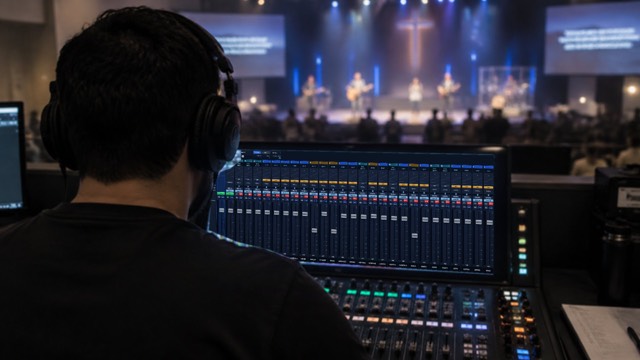
| A venue that already has a mixing console | An interface with line inputs, fed by an output of the console, or a console that connects to the computer by USB |
| Remote guests, a room with speakers, a floor monitor | An interface with more than one pair of outputs |
Connecting the console of the venue has its own page: connect a mixing console to the computer.
What to look at when choosing
- Number of inputs used at the same time. Count the sources of your largest event and add one or two. An interface cannot gain inputs later.
- Type of each input. Microphone inputs have a preamplifier and phantom power. Line inputs receive consoles, players and wireless receivers. Many interfaces have combined connectors that accept both.
- Separate outputs. One pair for the operator's headphones is the minimum. Each return that must be different from the main mix asks for one more output: this is what a mix-minus for a remote guest uses.
- Direct monitoring. A switch or knob that sends the input straight to the headphones, without going through the computer, so a presenter hears the own voice with no delay.
- Gain you can see. A level meter or at least a clipping light per input.
- Power and connection. Small interfaces take power from the USB cable; larger ones have their own supply. Check that the connector matches a free port of your computer.
- The system sees it without extra steps. Read the manufacturer's page for your operating system and version before buying. Some interfaces work as soon as they are plugged in; others need the manufacturer's software.
For video, set the interface to 48 kHz, the usual sample rate of video work, and keep that rate in every program.
Microphone level, line level and gain
A line signal is many times stronger than a microphone signal. A line output plugged into a microphone input overloads the preamplifier and distorts, and no fader afterward repairs it. A microphone plugged into a line input sounds weak and noisy. Match the output to the right kind of input.
Set the gain of each input with the loudest sound the source is going to make: the level should go high on the meter without lighting the clipping light. Distortion and crackle that appear after this adjustment are diagnosed in crackling and distorted audio.
Common mistakes
- Buying for today's two microphones when next month's event has four.
- Turning on phantom power without checking what is connected to the input. Read the manual of any equipment that is not a condenser microphone before sending phantom power to it.
- Leaving the gain low on the interface and compensating in the program. The noise goes up together with the voice.
- Using two interfaces for one production when one with more inputs would do.
- Putting the interface on the same unpowered hub as capture devices. A hub without its own power supply divides the power of one port among all the devices.
In NWK Live Production
In NWK Live Production an audio interface is added as an audio device. For an interface with several channels you choose how the channels come in: all in one stereo channel, each channel separate in mono, in stereo pairs, or only one channel or one pair. On an interface with more than two channels, NWK suggests each channel separate. See add a microphone or audio interface.
In Settings › Audio, the Build the mixer button creates at once one mixer channel for each input of the interface, and you can limit which channels of the interface are in use. Each channel shows the name of the interface and the input the sound comes from, and the label turns red if the interface is disconnected. See build the mixer from the audio interface.
For the outputs, the Master, the outputs A to E and the headphones each get a device of their own, and on an interface with several channels you choose the stereo pair or a mono output. See choose the audio output devices. The multitrack recording writes each mixer channel to its own WAV file at 48 kHz. See multitrack recording.
Related questions
Do I need an audio interface if I already have a USB microphone?
Not for that microphone. A USB microphone has the preamplifier and the converter inside and appears on the computer as an audio device. An interface becomes necessary when you add microphones with XLR connectors, a mixing console or outputs for returns.
How many inputs should the audio interface have?
Count the sources that sound at the same time in your largest event, counting a stereo source as two inputs, and add one or two as a reserve. If the venue already mixes everything on a console, two line inputs for the main mix of the console are enough.
Is an audio interface the same as a mixing console?
No. A mixing console mixes: it has faders, equalization and outputs for the room. An interface converts: it takes signals into the computer and brings audio out. Some consoles include an interface and connect by USB, and a program with a mixer can do the mixing with a simple interface.
In the NWK help center
- Add a microphone or audio interface
- Build the mixer from the audio interface
- Choose the audio output devices
- Record each channel to its own file (multitrack)
Written and reviewed by the NWK Live Production team (Setor 360 Tecnologia e Eventos Ltda). Published .
NWK creates one mixer channel for each input of the audio interface, sends the Master, five extra outputs and the headphones to the devices you choose and records each channel to its own file.
Try NWK free for 7 days