Short answer
To stream a funeral or a memorial service, agree with the family on what may be shown and on who receives the link, use one fixed wide camera, take clear sound from the lectern and keep the access restricted. Record the service on the computer and deliver the recording only to the person the family indicates. The work is done well when the people in the room do not notice the equipment and the people at a distance hear every word.
On this page
Step by step
- Speak with one person chosen by the family: what may be shown, who receives the link, what happens to the recording.
- Ask the place and the officiant about their rules, and arrive long before the family.
- Place one fixed wide camera at the back or at the side, and a second one on the lectern if needed.
- Take the sound of the lectern microphone and test before the first people arrive.
- Create the stream with restricted access and give the link only to the family contact.
- Start the recording, open the stream from black and do not change the frame without a reason.
- At the end, fade to black, stop the stream and deliver the recording to the family contact.
Begin with the family
Ask the family to indicate one person to speak with, and take to that person only the questions that are needed:
- What may be shown. The lectern and the flowers are always acceptable. The casket and the faces of the people present appear only if the family asks for that.
- Who receives the link. The family sends the link. The team does not publish or announce the stream.
- The recording. Whether the family wants a recording, who receives the file, and whether any copy is kept afterwards.
- Name on screen. Whether a name, dates or a photograph should appear, and with which exact spelling.
Customs differ between religions and between families. Ask the officiant and the place whether cameras are accepted and where.
One fixed camera, and a quiet presence
One wide camera on a tripod, at the back or at the side of the room, covers the whole service. A second camera framed on the lectern helps when several people speak. Positions for a religious space are discussed in camera plan for church services and Mass.
| Do | Avoid |
|---|---|
| A stable wide frame, with the lectern visible | Close shots of people who are crying |
| A slow change between two fixed frames | Zooms, camera movement and effects |
| Tripods outside the paths, cables taped down | An operator walking during the service |
| Screens dimmed, lights of the equipment covered | Sound tests after the family arrives |
Dress as the people present dress, keep phones silent and leave only after the family has left.
Every word has to be heard
People at a distance follow a farewell service by its words: the readings, the tributes, the names. Take an output of the console of the place when the lectern has a microphone, or put a discreet microphone on the lectern. The microphone of a camera at the back of the room records echo and the sounds of the room. Listen on headphones during the whole service, and lower the level by hand if a microphone picks up a private conversation near the lectern.
Privacy
A farewell is not a public event unless the family says so. On YouTube, an unlisted video can be seen and shared by anyone with the link and does not appear in the search results of the platform, unless someone adds the video to a public playlist; a private video is seen only by the people the owner chooses. On any other platform, restrict the access in the panel of the platform, and look there for the option to turn off or moderate the comments.
Give the stream a neutral title chosen with the family, and send the link only to the family contact. Music played in the service may be protected by copyright; check with the rights organization of your country.
What appears on screen
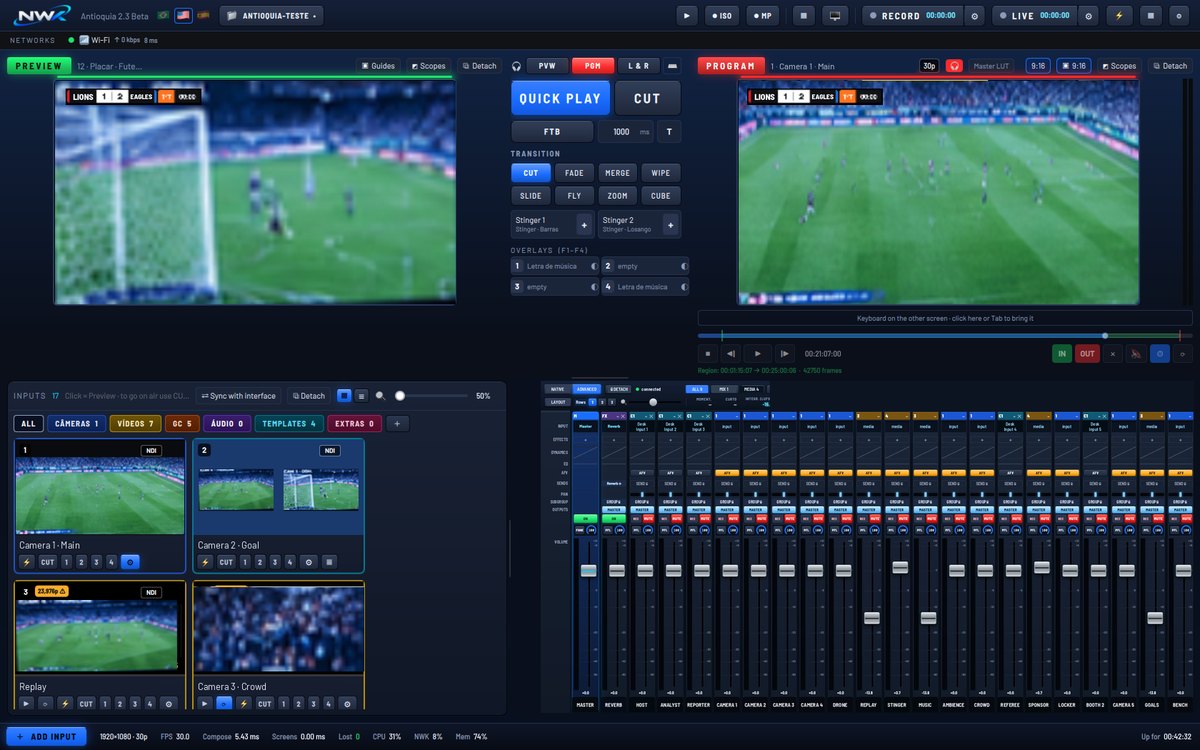
The picture of the room is enough. If the family asks, an opening image with the name and the dates can stay on screen before the service begins. In NWK Live Production an image is added as an input, and a centered title has two fields, a title and a subtitle. The FTB button fades the whole Program to black and a second click brings the picture back, which gives a sober beginning and end.
Connection, recording and delivery
Chapels and cemeteries often have a weak connection. Measure the upload speed at the place before the day, with how much upload speed a live stream needs as a reference, and take a second connection as described in phone 4G as backup internet.
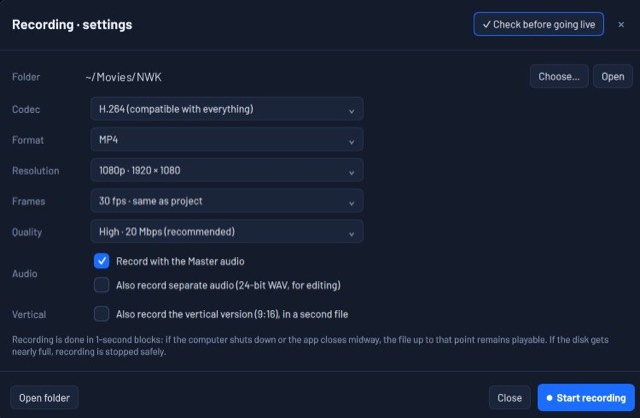
Record the Program on the computer. The recording does not depend on the internet and continues while the stream reconnects, so the family receives the complete service even if the stream fails for some minutes. Deliver the file only to the family contact, in the way the family prefers, and delete the other copies if that was agreed.
Related questions
Is it appropriate to stream a funeral?
It is, when the family wants it. A stream allows relatives who are ill, elderly or far away to be present. The decision, the list of people who receive the link and the limits of what is shown belong to the family.
How do I keep a funeral stream private?
Create the stream with restricted access and send the link only through the family. On YouTube, an unlisted video does not appear in the search results and can be seen by anyone who has the link. On other platforms, restrict the access in the panel of the platform.
What if the internet fails during the service?
Keep the recording running on the computer and do not interrupt the service. The recording does not depend on the internet. After the service, give the recording to the family contact, who decides with whom to share the recording.
In the NWK help center
- Record the Program
- Fade the screen out with FTB
- Create a title or lower third
- Add an image
- Check everything before going live
Sources and references
Written and reviewed by the NWK Live Production team (Setor 360 Tecnologia e Eventos Ltda). Published .
NWK Live Production is a live production and streaming program for Mac, with recording on the computer.
Try NWK free for 7 days