Short answer
The replay mistake that costs the most is covering live play: the replay is still on air when the game restarts and the audience misses what happens next. The others follow the same pattern: replays that are too long, that start too early, that repeat the angle already seen, that enter with no visual warning, or that show every play in slow motion. The fix is one rule: a replay is short, shows something new and ends before the game restarts.

On this page
Eight mistakes and the fix for each
| Mistake | What the viewer sees | Fix |
|---|---|---|
| Replay over live play | The game restarts off screen | Leave the replay as soon as the game is about to restart, even in the middle of the clip |
| Replay too long | Seconds of nothing before and after the play | Start just before the decisive action and end at the outcome |
| Out point too early | The shot is seen, the ball in the net is not | Always include the result of the play |
| Same angle as the live shot | The same picture twice | Use the angle that was not on air |
| No entry or exit marker | Confusion about what is live | Same short sting in and out, every time |
| Slow motion on everything | A broadcast that drags | Slow down the contact, not the whole run-up |
| Replay of every play | Replays stop meaning anything | Replay what changes the game or what the audience could not see |
| Searching instead of marking | The replay arrives late or not at all | Mark the play when it happens |
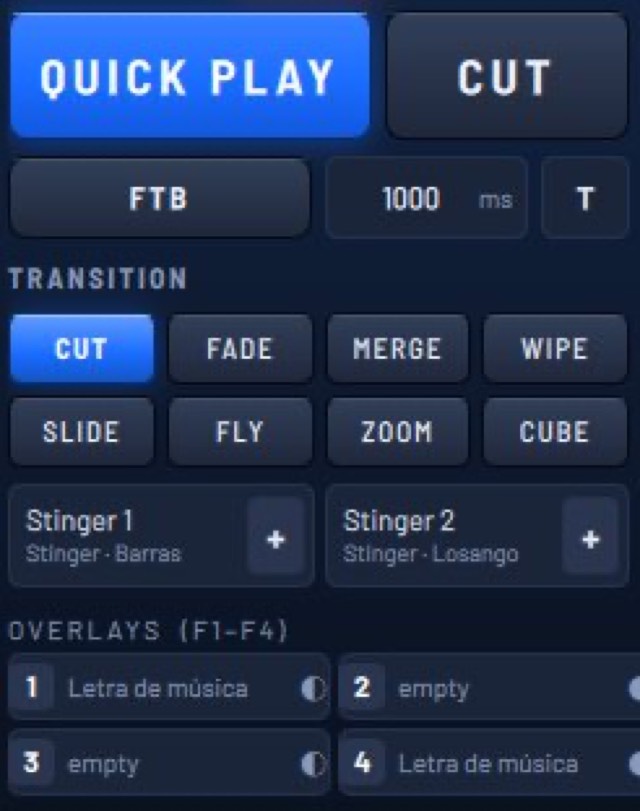
Entry and exit are covered in replay transitions and stingers, and the choice of speed in which replay speed to use.
Mistakes of judgment
- Serious injuries. Do not repeat in slow motion a play in which someone was badly hurt. Show the game, not the injury.
- Disputed calls. A replay shown on a screen inside the venue reaches the players and the crowd. Agree with the organizer beforehand on what goes to that screen.
Words agreed between director and operator
With two people, most errors come from a misunderstanding. Three fixed phrases are enough: the operator says that a play is ready and names the angle; the director says to go; either one says to return to live. Nothing else is said during the replay.
Game-day checklist
- Recording started on every replay camera before the warm-up, and checked by playing back ten seconds.
- Free disk space enough for the whole game plus extra time.
- Entry and exit sting loaded and tested.
- One marked play sent to air and brought back, as a test.
- Camera operators told to keep following the play after the whistle. The reaction is part of the replay.
How NWK Live Production helps
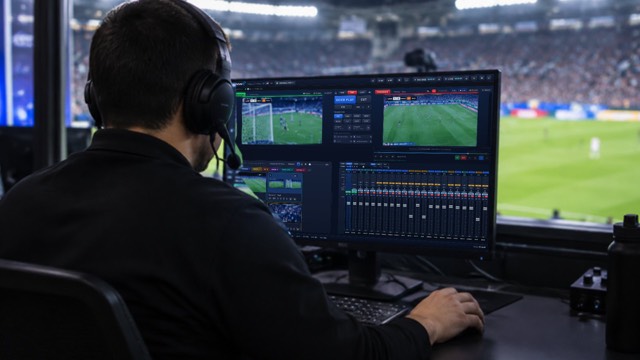
Three features of the NWK replay go straight at these errors. Plays are marked with one key, which removes the search. One screen shows what is on air and the other the play being edited, so the live program never stops while the replay is prepared. When a director cuts from the browser, the replay only goes on air when the director says so.
Related questions
How long should an instant replay be?
A replay should last as long as the play and no longer: it starts just before the decisive action and ends when the outcome is clear. If the game is about to restart, the replay ends earlier. Longer sequences belong in the halftime highlights.
What is the most common instant replay mistake?
The most common mistake is keeping the replay on air while the game restarts, so the audience misses live action.
Should every goal or point be replayed?
Replay the plays that change the game and the ones the audience could not see well live. In sports with many points, such as basketball and volleyball, replaying every point slows the broadcast and makes the replay lose its weight.
In the NWK help center
Written and reviewed by the NWK Live Production team (Setor 360 Tecnologia e Eventos Ltda). Published .
NWK replay marks plays with one key and keeps the live program running while the replay is prepared.
Try NWK free for 7 days